
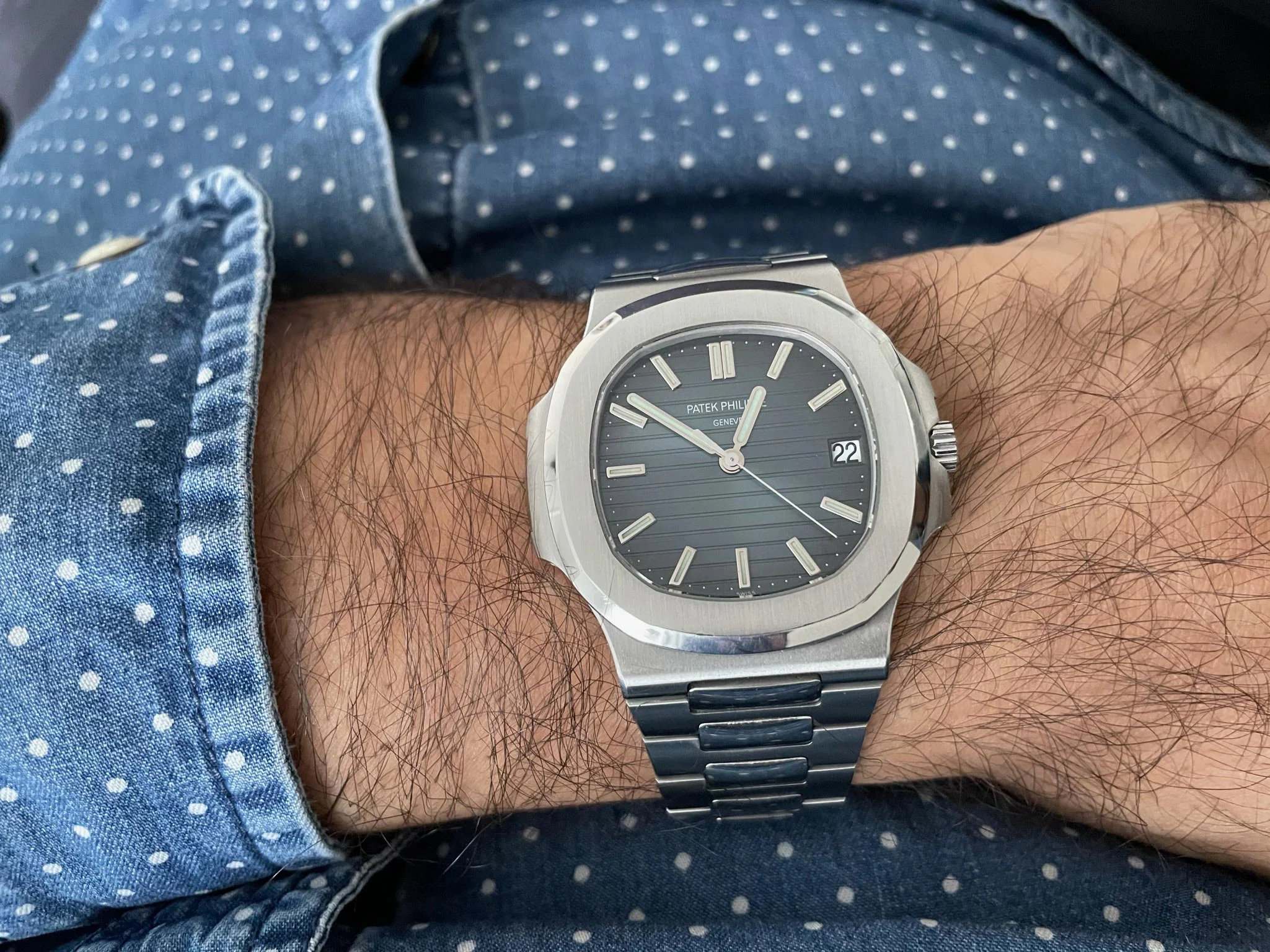
Patek Philippe represents the absolute pinnacle of Swiss haute horology. For decades, acquiring a reference like the Nautilus 5711, Aquanaut 5167, or Calatrava required waiting lists spanning several years or paying astronomical premiums on the gray market.
In recent years, modern manufacturing techniques and precision engineering have transformed high-end replica production. Beyond low-grade imitations, top-tier watchmakers now craft what the enthusiast community calls “1:1 Super Clones”. These timepieces go far beyond cosmetic likeness, mirroring genuine models down to the fractional millimeter and microscopic mechanical movement details.
Here are the top 5 things you probably didn’t know about 1:1 Patek Philippe Super Clones.
1. True Standalone Clone Movements Have Replaced Decorative Plates
Older generations of replica watches relied heavily on cheap Japanese Miyota or ETA-base movements covered with thin decorative metal plates. While they looked similar at a quick glance through the sapphire caseback, they made the watch noticeably thicker and lacked true mechanical accuracy.
Today, specialized top-tier factories utilize custom, standalone clone movements—such as custom replicas of the Patek Philippe Calibre 324 S C or Calibre 240.
- Exact Component Layout: The balance wheel, gear train, and bridges are constructed in the precise positions dictated by original Swiss schematics.
- Functional Micro-Rotors: On models featuring automatic micro-rotors, the mini-rotor actively winds the mainspring, matching the real power reserve mechanism rather than serving as a static ornament.
- Correct Operating Mechanics: The quick-set date features, hand-setting crown directions, and sweeping secondhand frequencies operate identically to genuine pieces.
2. Ultra-Thin Case Profiles Are Matched Down to the Millimeter
One of the defining characteristics of a genuine Patek Philippe is its slim profile. The iconic Nautilus 5711, for example, measures a delicate 8.3mm in thickness. Early replicas struggled with this requirement, measuring 10mm to 11mm thick because of stacked decorative movement plates.
Because 1:1 Super Clones now build true integrated movements, modern manufacturing achieves the exact 8.3mm profile. This mechanical milestone provides several distinct benefits:
- Authentic Wrist Feel: The center of gravity and weight distribution closely mirror the genuine steel or precious metal counterparts.
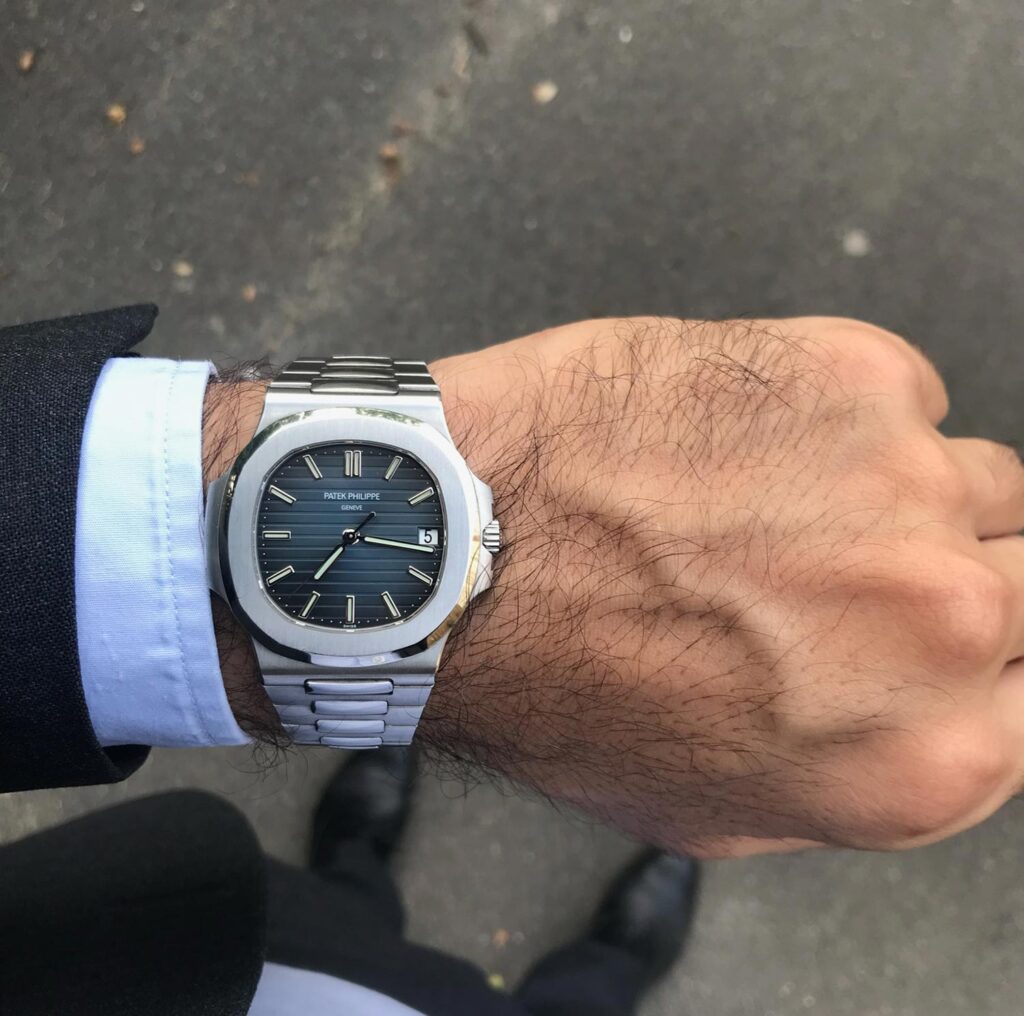
- Proportional Lug Curvature: Lugs taper naturally against the wrist, allowing integrated stainless steel bracelets or rubber straps to drape smoothly without awkward gaps.
- Slide-Under-Cuff Convenience: Just like the luxury original, the watch slides seamlessly under formal shirt cuffs.
3. Advanced Sunburst Dials Capture the Elusive “Color-Shift” Effect
Replicating a Patek Philippe dial is notoriously difficult. The original dials—especially the horizontal gradient blue/black on the Nautilus or the textured embossing on the Aquanaut—change shade depending on ambient lighting conditions.
High-tier 1:1 Super Clones use advanced multi-layer anodization and electroplating processes to recreate this visual nuance.
- Dynamic Gradient Shading: The center of the dial displays a vibrant blue or olive green, shifting into deep charcoal black near the outer minute track.
- Crisp Embossing: The horizontal ridges or chequerboard patterns feature sharp, clean depth rather than soft, flat molding.
- Applied Hour Markers: White gold-plated hour markers and hands are hand-applied with high-luminosity Super-LumiNova coatings, ensuring flawless night readability.
4. Alternate Hand-Finishing Mixes Satin Brushing and Mirror Polishing
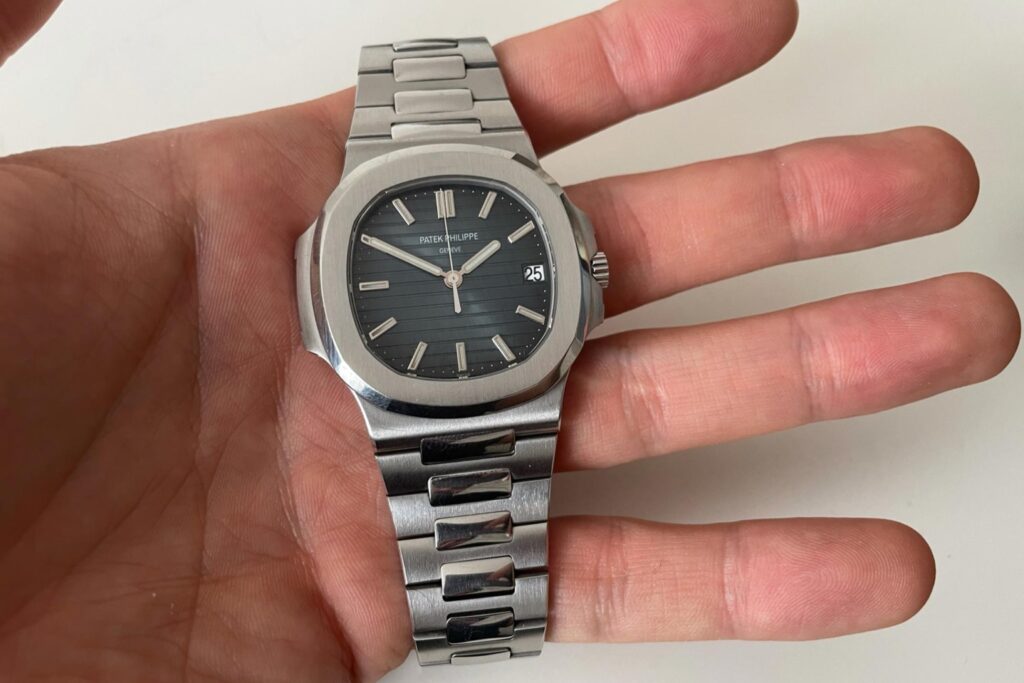
A major difference between lower-tier replicas and true 1:1 Super Clones lies in surface finishing. Luxury sports watch cases rely on contrasting surface textures to reflect light from every angle.
Super Clone cases undergo labor-intensive surface finishing processes:
| Component Feature | Finishing Method | Visual Effect |
| Bezel Top | Vertical Satin Brushing | Matte, anti-reflective texture |
| Bezel Chamfer & Edges | Mirror Polish | High-shine contrast line along bevels |
| Case Sides & Lugs | Micro-Grit Satin Polish | Smooth, refined metallic feel |
| Bracelet Links | Alternating Polished & Brushed | Seamless light reflections across links |
This interplay between brushed and mirror-polished stainless steel ensures that the watch catches light naturally, avoiding the dull, uniform look found on standard counterfeits.
5. Working Complications Are No Longer Just “For Show”
Historically, purchasing a replica watch with complex complications—such as power reserve indicators, moon phases, or annual calendars—meant accepting frozen or purely decorative subdials. Hands were often glued into place to give the illusion of functional dials.
Modern 1:1 Super Clones have overcome these engineering limits:
- Functional Moon Phase Displays: Dials with moon phase complications follow genuine 29.5-day lunar cycles.
- Active Power Reserve Indicators: The power reserve hand responds dynamically as the internal mainspring loses or gains tension during manual winding or active movement.
- Integrated Date Wheels: Date discs feature custom typography, correctly centered text alignment, and instant midnight date switching.
Key Takeaways for Watch Enthusiasts
Understanding 1:1 Patek Philippe Super Clones requires looking beyond simple aesthetic appearance. From ultra-thin case dimensions and custom clone movements to functional complications and multi-layer sunburst dials, modern precision manufacturing has elevated horological replication to entirely new standards.
Whether evaluating case finishing, dial textures, or mechanical balance, knowing these subtle engineering details helps enthusiasts appreciate the modern craftsmanship driving today’s luxury timepiece market.