
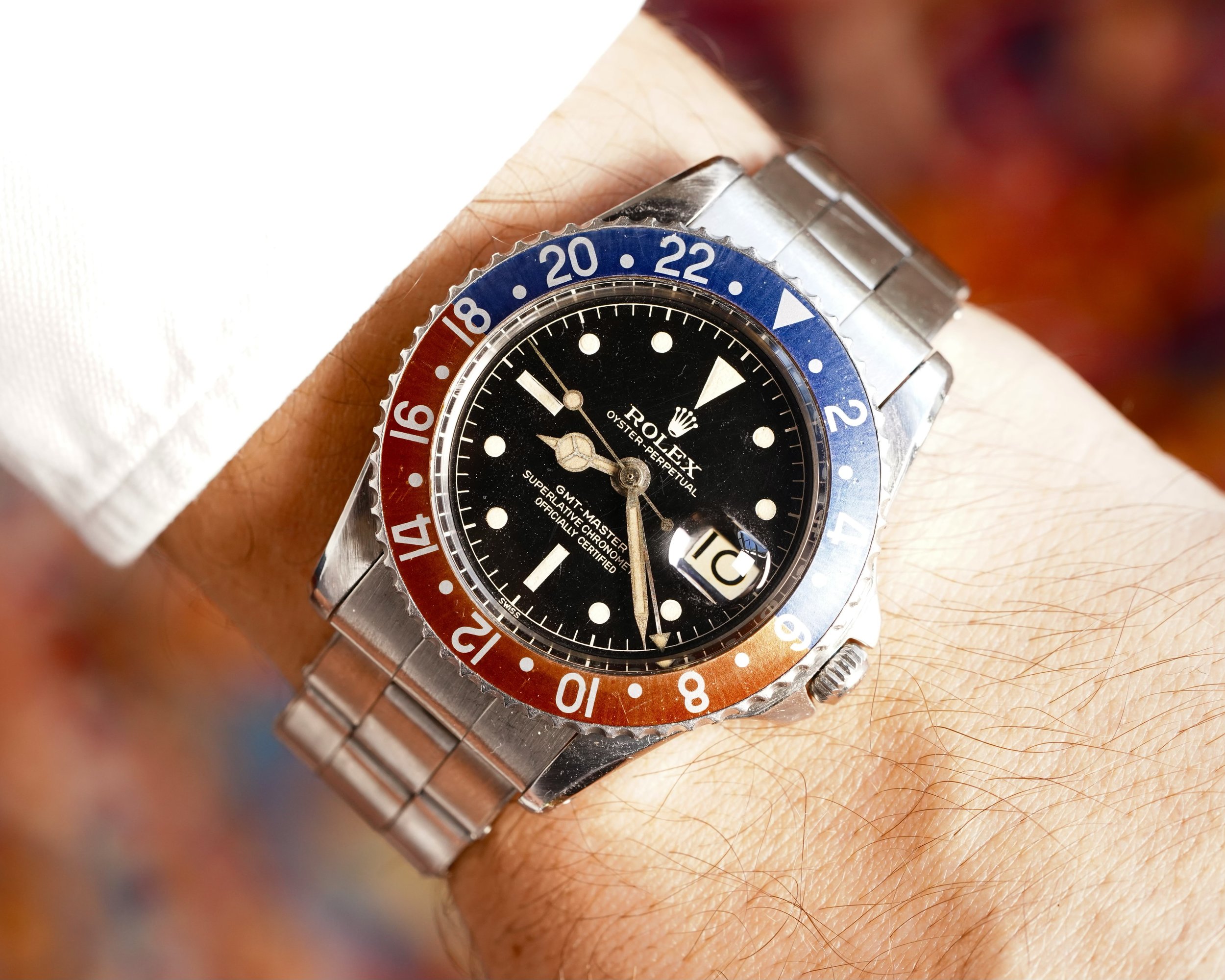
The Rolex GMT-Master Reference 1675 is one of the most recognizable vintage GMT watches ever produced. Originally introduced in the late 1950s, the 1675 remained in production for roughly two decades and became an important chapter in the history of the GMT-Master collection. Its classic proportions, acrylic crystal, 24-hour bezel and distinctive fourth hand continue to attract vintage watch enthusiasts today.
For collectors and enthusiasts interested in vintage-inspired designs, a Replica Rolex GMT-Master 1675 can offer an opportunity to explore the visual character of this historic model without purchasing a rare vintage watch. However, understanding the original reference, its design details and the differences between replica versions is important before making a purchase.
What Makes the Rolex GMT-Master 1675 Special?
Reference 1675 replaced the earlier GMT-Master 6542 and introduced several important design changes. One of the most noticeable updates was the addition of crown guards on steel models. The case also became approximately 40mm, while the earlier Bakelite bezel was replaced by an aluminum 24-hour insert.
The result was a more robust and recognizable GMT-Master design. The 1675 also had a remarkably long production period, generally dated from around 1959 through the late 1970s or 1980. Because of this long production run, numerous dial, bezel, case and movement variations exist.
For modern enthusiasts, this variety is part of the appeal. A replica rolex version inspired by the 1675 can focus on the classic vintage appearance rather than the specifications of a modern GMT watch.
Replica Rolex GMT-Master 1675 Design Review
The overall appearance is the first thing that makes a Replica Rolex GMT-Master Reference 1675 attractive. Its vintage proportions are very different from many contemporary sports watches.
Vintage 40mm Case
The original 1675 is commonly associated with a case around 40mm in diameter. Detailed collector references also document variations in case thickness, including thinner early examples and slightly thicker later cases.
For a replica, case proportions are particularly important. A case that is too thick or has overly sharp edges can make the watch look modern rather than vintage.
A well-designed vintage-style replica should pay attention to the shape of the lugs, crown guards, case sides and caseback. These small details have a significant effect on the overall appearance when the watch is worn on the wrist.
Acrylic-Style Crystal
One of the defining characteristics of the vintage GMT-Master 1675 is its acrylic crystal. Unlike modern sapphire crystals, acrylic has a softer visual appearance and can produce the warm reflections associated with older watches.
This is an important detail for anyone looking for a vintage Rolex-inspired watch. A replica with a modern-looking flat sapphire crystal can lose much of the character that makes the 1675 distinctive.
24-Hour Bezel
The 1675 is strongly associated with its bidirectional 24-hour bezel. The classic red-and-blue combination is commonly known as the Pepsi bezel, while later examples were also available with black inserts.
On a replica, the bezel colors, font, alignment and insert finish deserve careful attention. Vintage aluminum inserts naturally developed different levels of fading over time, meaning that two original watches can look surprisingly different even when they share the same reference.
Dial Variations of Reference 1675
The dial is one of the most interesting parts of the 1675 story. Because the reference was produced for so many years, Rolex used several different dial styles.
Early examples featured glossy gilt dials, while later watches moved toward matte black dials with lighter printing. The transition occurred around the middle of the 1960s, and collector research identifies several different variations within these periods.
Gilt Dial
Early gilt dials have a glossy appearance and are particularly associated with the earliest generations of the 1675. Depending on the production period, collectors may encounter chapter-ring designs, different crown-guard shapes and other transitional details.
For a Replica Rolex GMT-Master 1675, a gilt dial creates a particularly strong vintage aesthetic. The glossy black surface combined with gold-colored details gives the watch a warmer appearance than later matte versions.
Matte Dial
Later 1675 models introduced matte black dials with white printing. These watches represent another major chapter of the reference and remained in production for many years.
The matte dial is often easier to incorporate into a vintage-inspired design because its understated appearance works well with a faded bezel and aged-looking lume.
When comparing replica watches, check the relationship between the dial printing, hour markers, hands and bezel. Vintage watches have relatively subtle proportions, so oversized or incorrectly shaped elements can make a replica look less convincing.
Movement Options and What to Know
The movement is another major consideration when reviewing a replica vintage GMT watch.
Historical examples of the 1675 were equipped primarily with Rolex calibers 1565 and 1575 during the main production period. The 1565 operated at 18,000 vibrations per hour, while the later 1575 operated at approximately 19,800 vibrations per hour. A hacking function was introduced to the 1575 around 1971.
Replica watches can use completely different movements designed to reproduce the external functions of the original. Therefore, buyers should not assume that a replica contains a historically correct Rolex movement.
Instead, pay attention to practical factors such as:
- Movement reliability
- Date-change operation
- GMT hand functionality
- Winding feel
- Service availability
- Accuracy
- Replacement-part availability
For everyday use, a dependable modern movement may be more practical than attempting to reproduce every historical mechanical detail.
Wearing a Replica Rolex GMT-Master 1675
One advantage of the 1675-inspired design is its versatility. The relatively moderate case size works well with casual clothing, denim, shirts and everyday outfits.
The vintage appearance also gives the watch a different personality from contemporary luxury sports watches. The acrylic crystal, aged-style lume, aluminum-look bezel and classic dial create a softer visual effect.
Bracelet choice can also change the character of the watch. A Jubilee-style bracelet emphasizes the vintage aesthetic, while an Oyster-style bracelet creates a more straightforward sports-watch appearance.
What to Check Before Buying
If you are considering a Replica Rolex GMT-Master 1675, look beyond the brand name or product photographs. Construction details usually have a greater impact on the overall appearance and wearing experience.
1. Case Shape
Check whether the case has natural-looking curves and properly shaped lugs. Excessively thick cases can make a vintage design look less authentic to the period.
2. Dial Printing
Look closely at the Rolex-style crown, text, hour markers and minute track. Poor printing or incorrect spacing can be particularly noticeable on a simple vintage dial.
3. Bezel Alignment
The 24-hour markings should align properly with the dial. The red and blue colors should also have a balanced appearance rather than looking overly bright.
4. Hands
The GMT hand is one of the defining visual elements of the 1675. Its shape, length and color should work naturally with the hour and minute hands.
5. Crystal
For a vintage-inspired version, an acrylic-style crystal can contribute significantly to the overall appearance.
6. Bracelet and Clasp
The bracelet should fit comfortably without excessive looseness. Pay attention to links, end links and clasp construction, especially if the watch is intended for regular wear.
Replica Rolex GMT-Master 1675 vs. Modern GMT Watches
A vintage 1675-inspired replica offers a very different experience from a modern GMT-style watch.
Modern GMT watches typically emphasize larger cases, sapphire crystals, improved water resistance and contemporary movements. The 1675 design instead focuses on vintage proportions, acrylic crystal and historical styling.
This difference is important when choosing a watch. Someone looking for a modern travel watch may prioritize movement performance and durability, while someone attracted to vintage aesthetics may care more about dial texture, bezel appearance and case proportions.
Is a Replica Rolex 1675 Worth Considering?
The answer depends largely on what you want from the watch. The original Rolex GMT-Master 1675 has considerable historical interest because of its long production period and wide range of variations.
A replica version should therefore be viewed as a vintage-inspired alternative rather than an original collectible. It cannot provide the provenance, originality or collector value of a genuine vintage Rolex.
For someone primarily interested in the visual style, however, a well-made replica can recreate many of the recognizable design elements that made the 1675 famous.
Final Thoughts on the Replica Rolex GMT-Master Reference 1675
The Replica Rolex GMT-Master Reference 1675 remains an interesting choice for enthusiasts who appreciate classic GMT styling. Its combination of a vintage 40mm case, acrylic-style crystal, 24-hour bezel, fourth GMT hand and classic black dial creates an instantly recognizable look.
The original 1675 went through numerous changes during its long production period, including the transition from gilt to matte dials and the move from caliber 1565 to caliber 1575.
When evaluating a replica watch, focus on proportions, dial quality, bezel alignment, crystal style, bracelet construction and movement reliability rather than simply comparing product names. A carefully designed vintage-inspired model can capture the visual character of the legendary GMT-Master 1675 while offering a different and more accessible way to enjoy its classic design.